The Fitzherbert Community Hub
The transformation of a former convent school into a vibrant community hub
Project Information
Project: Fitzherbert Community Hub
Client: Brighton Table Tennis Club, The Roman Catholic Diocese Of Arundel & Brighton, Voices in Exile, The Real Junk Food Project
Location: Brighton
Scope: Feasibility Study, RIBA Stages 0-7
Status: Completed
Awards
Winner Sussex Heritage Trust Awards - Public and Community Award (2023)
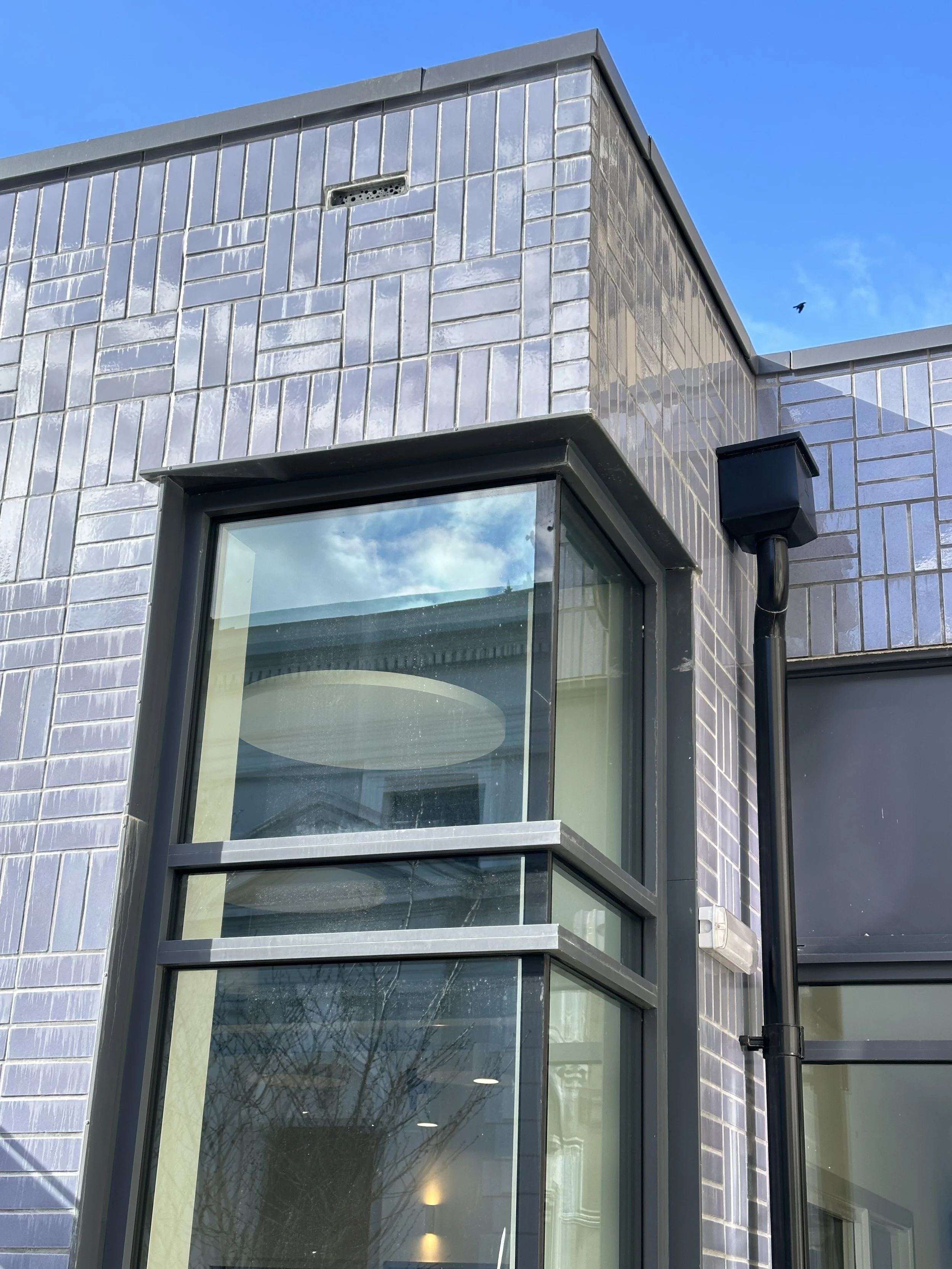
Highly Commended Sussex Heritage Trust Awards - ECO Award (2023)
Finalist Constructing Excellence London & South East Awards - Conservation and regeneration (2023)
Finalist Constructing Excellence London & South East Awards - Value (2023)
Shortlisted Blue Badge Access Award (2023)
Longlisted RIBAJ MacEwen Award (2023)
The brief
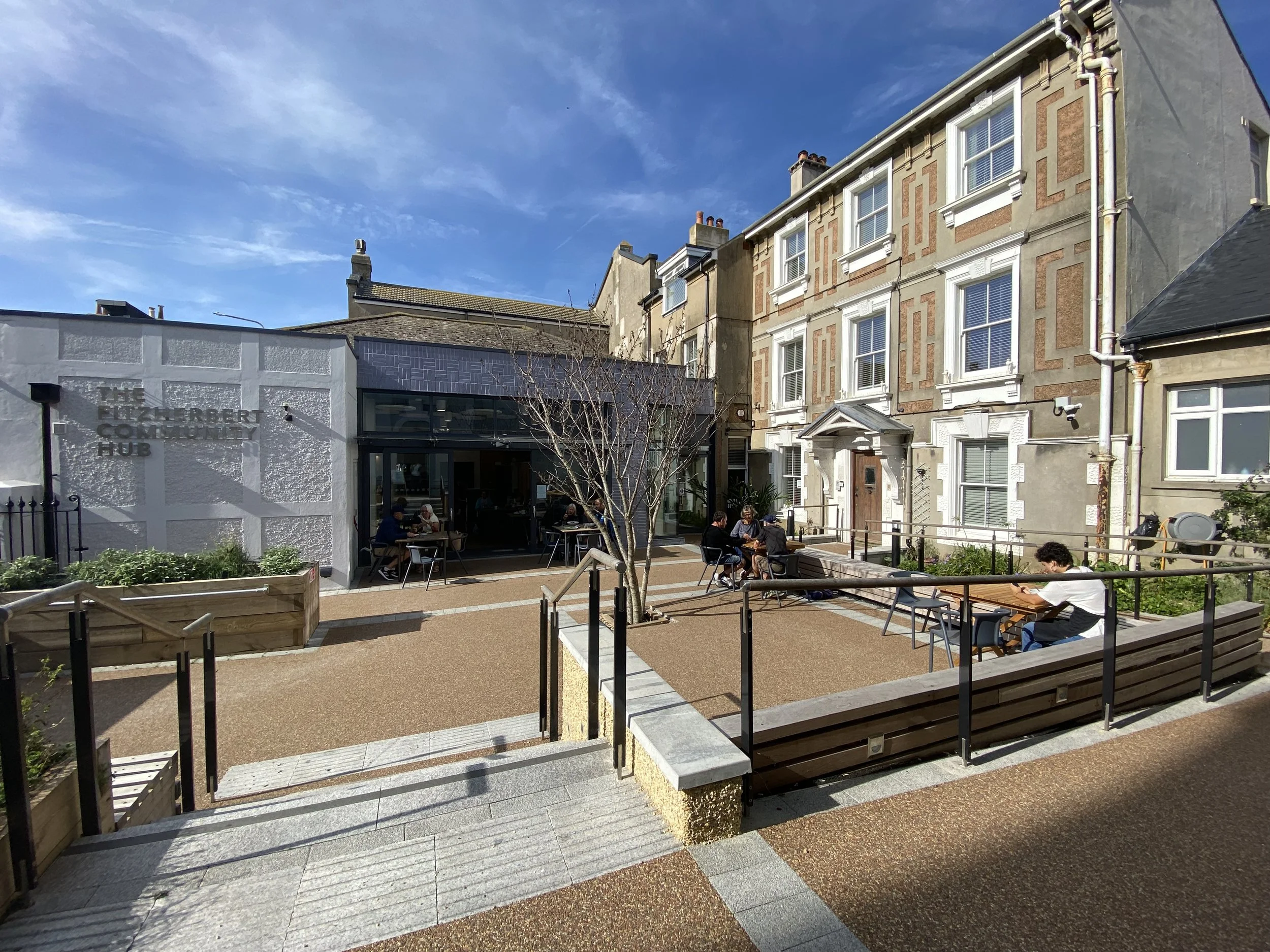
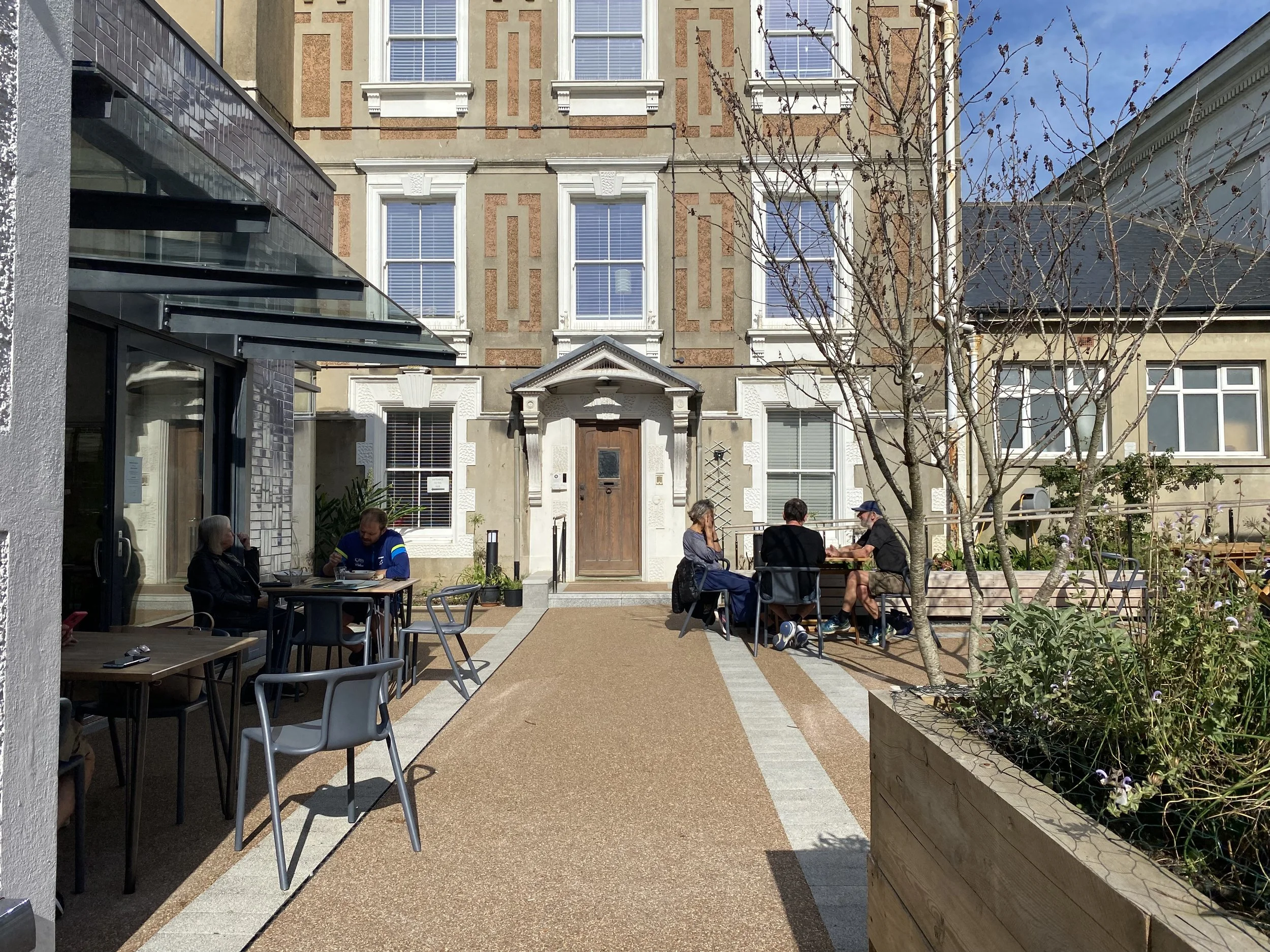
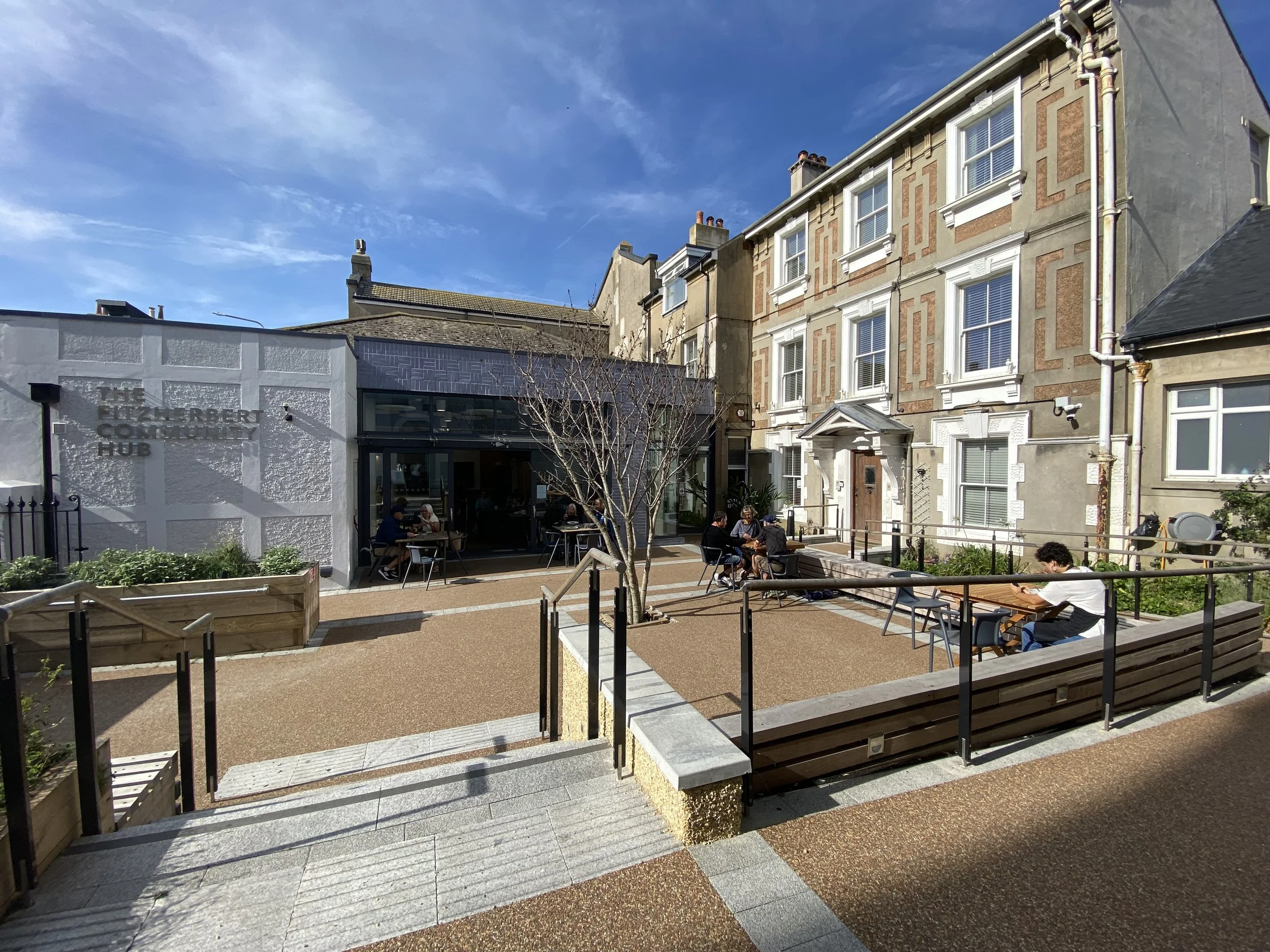
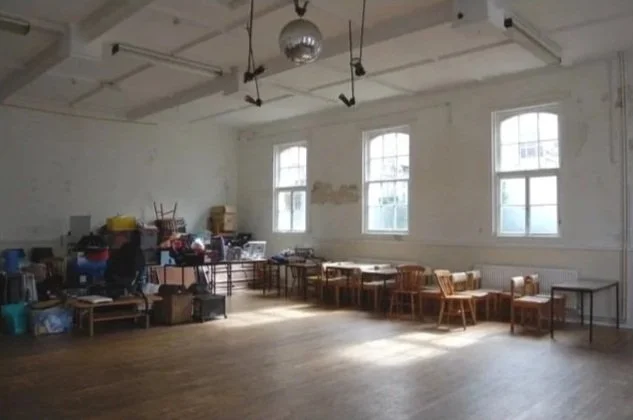
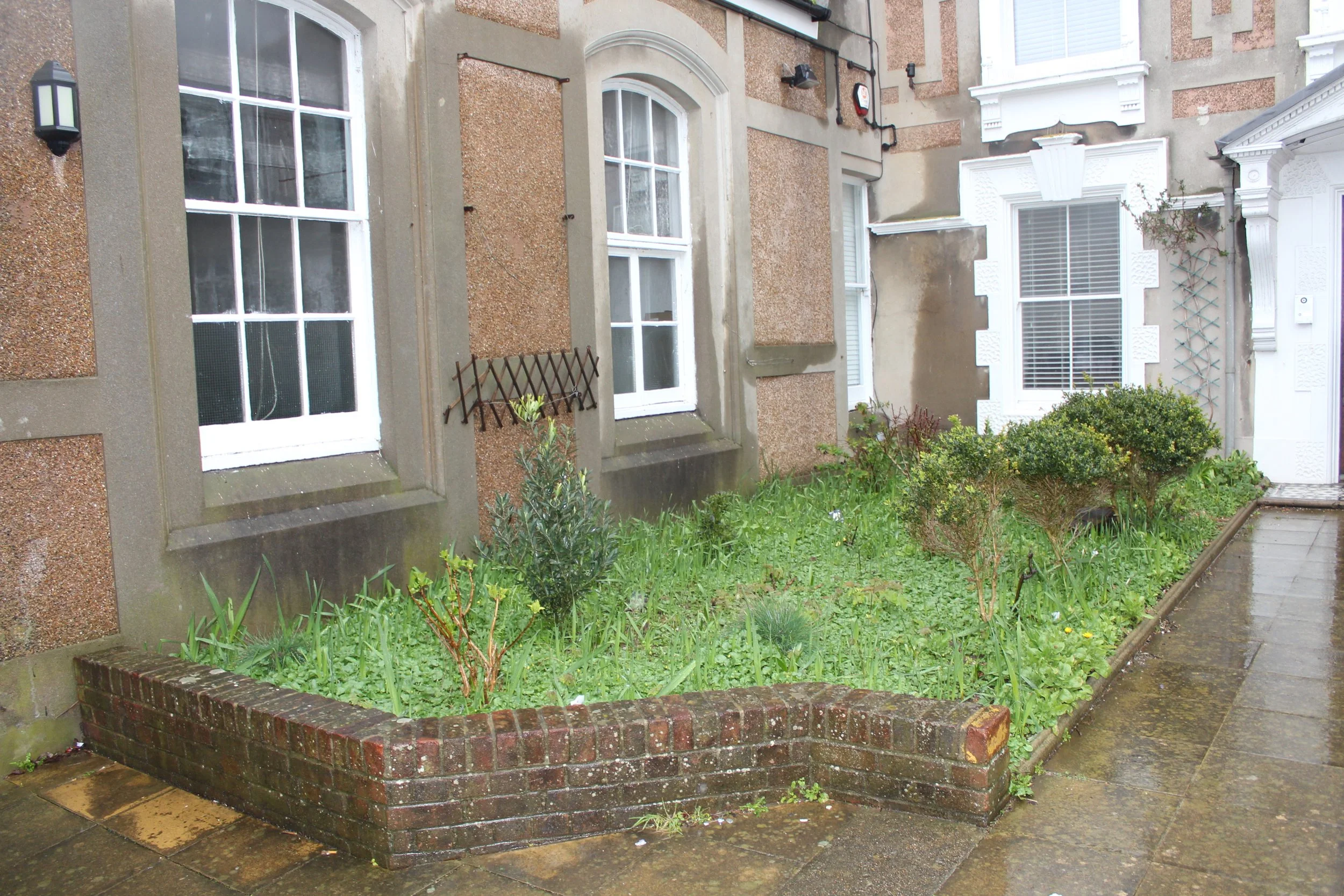
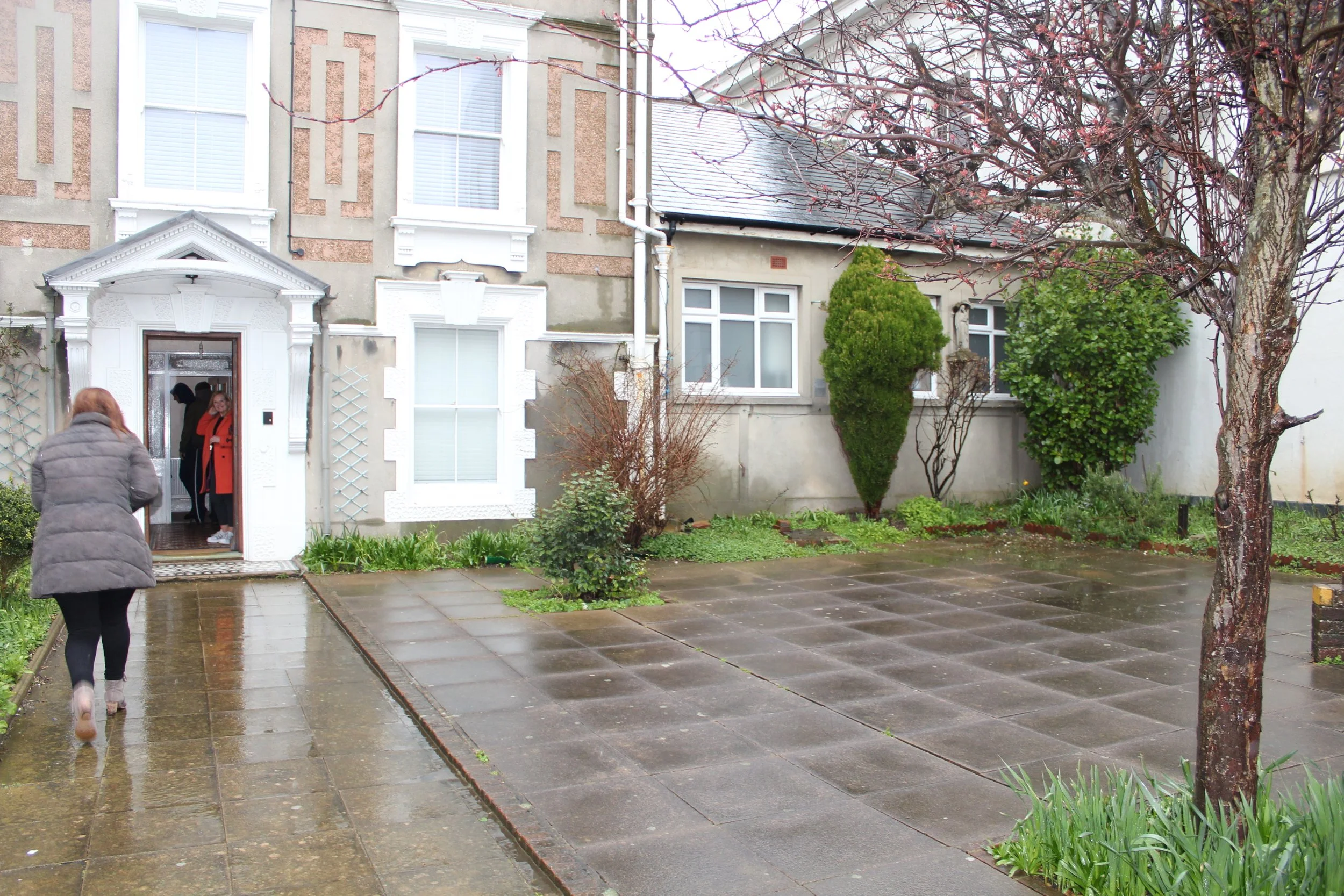
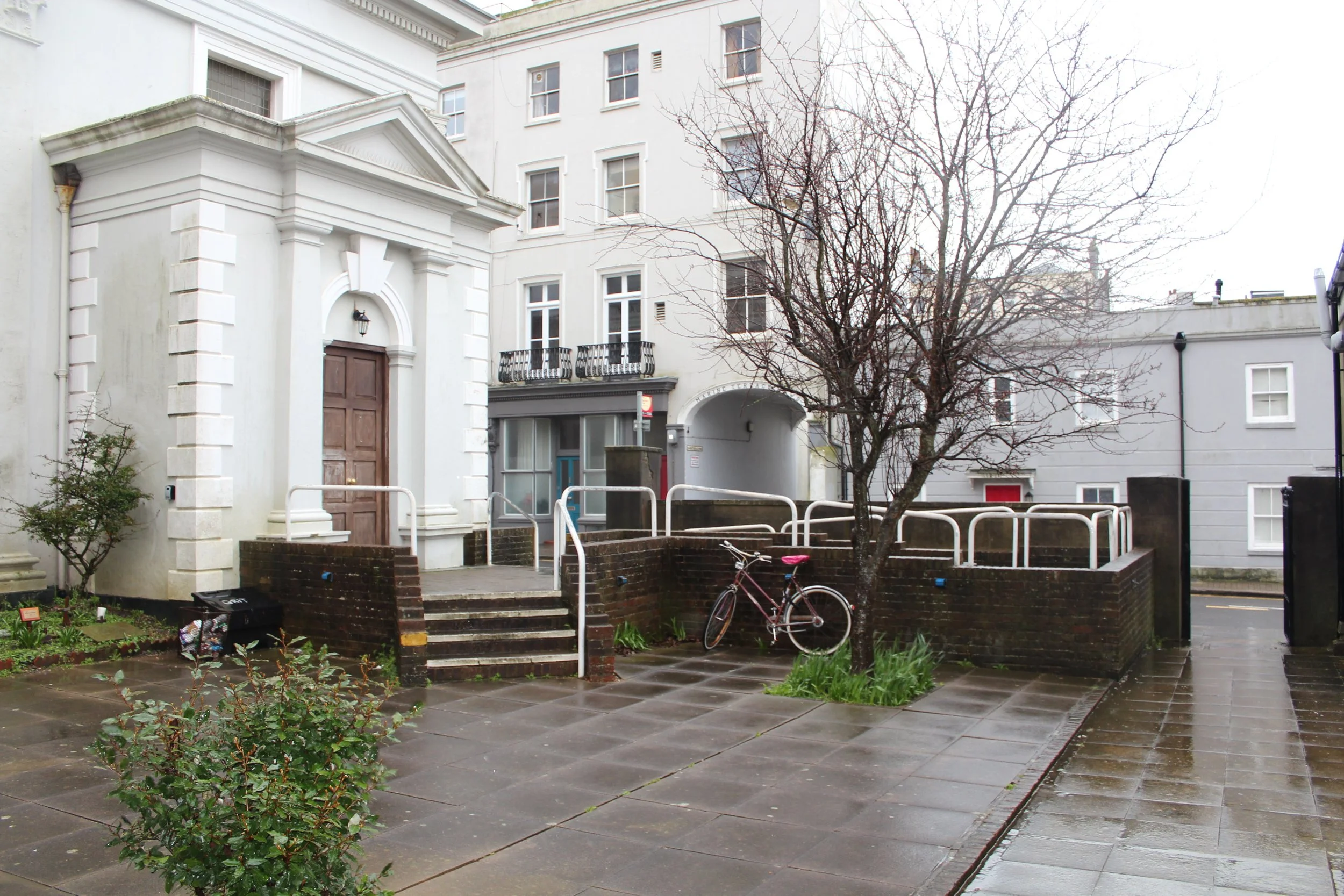
Originally built as a school and later adapted as a parish hall, the building sits beside a Grade II* listed church and is recognised locally as a non-designated heritage asset. Inside, fragmented rooms, significant level changes and poor circulation limited access and restricted how the building could be used by multiple community and faith-based organisations concurrently.
What began as a Sport England funded feasibility study on behalf of the Brighton Table Tennis Club developed into a reinvigorated community hub that supported the work of four separate partners: Brighton Table Tennis Club, The Roman Catholic Diocese Of Arundel & Brighton, Voices in Exile, and The Real Junk Food Project.
Our Approach
The initial brief was to create a community cafe in the existing Parish Hall. However, we identified areas of overlap between each of the stakeholders that had not been previously recognised and saw an opportunity that sought more integration and inclusion.
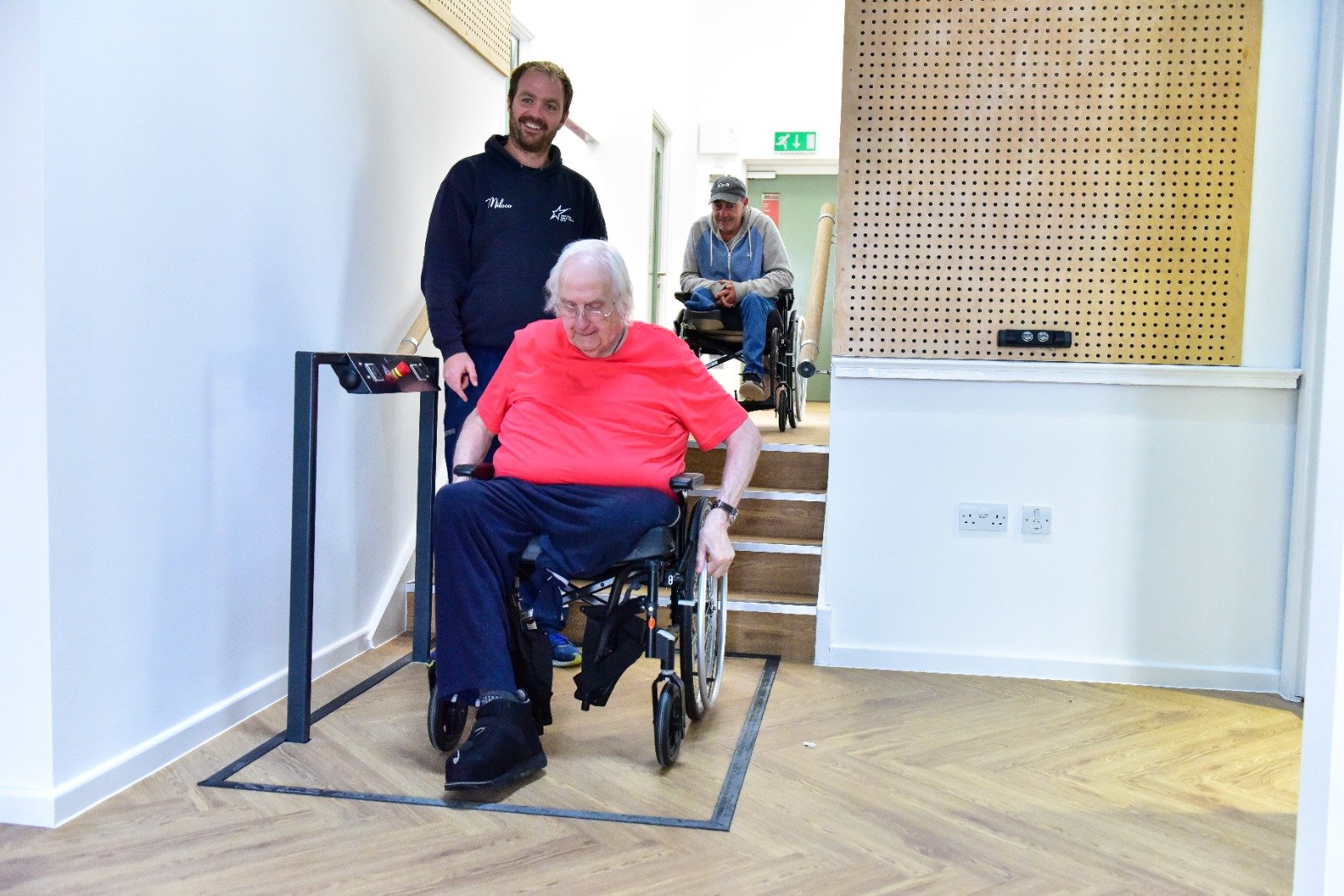
Accessibility was treated as a core design principle from the outset. Working with specialist access consultant Jane Simpson Access, we developed a coordinated strategy to resolve significant level changes, improve circulation and provide step-free access throughout. In particular, we were very aware that many visitors to the centre may be suffering stress, trauma or just having a bad day. It was important to us that a parent can get their pram through the front door without fuss, that anyone can access the toilet with dignity, and that the space felt comfortable and safe. We used the spatial layout and visual cues to improve wayfinding and reduce reliance on written signage, supporting users with differing mobility, sensory, cognitive and language needs.
These principles are demonstrated in practice in the accompanying short video, which illustrates how users experience and navigate the building: https://fitzherbertcommunityhub.org.uk/stories-of-note/
Outcomes & Impact
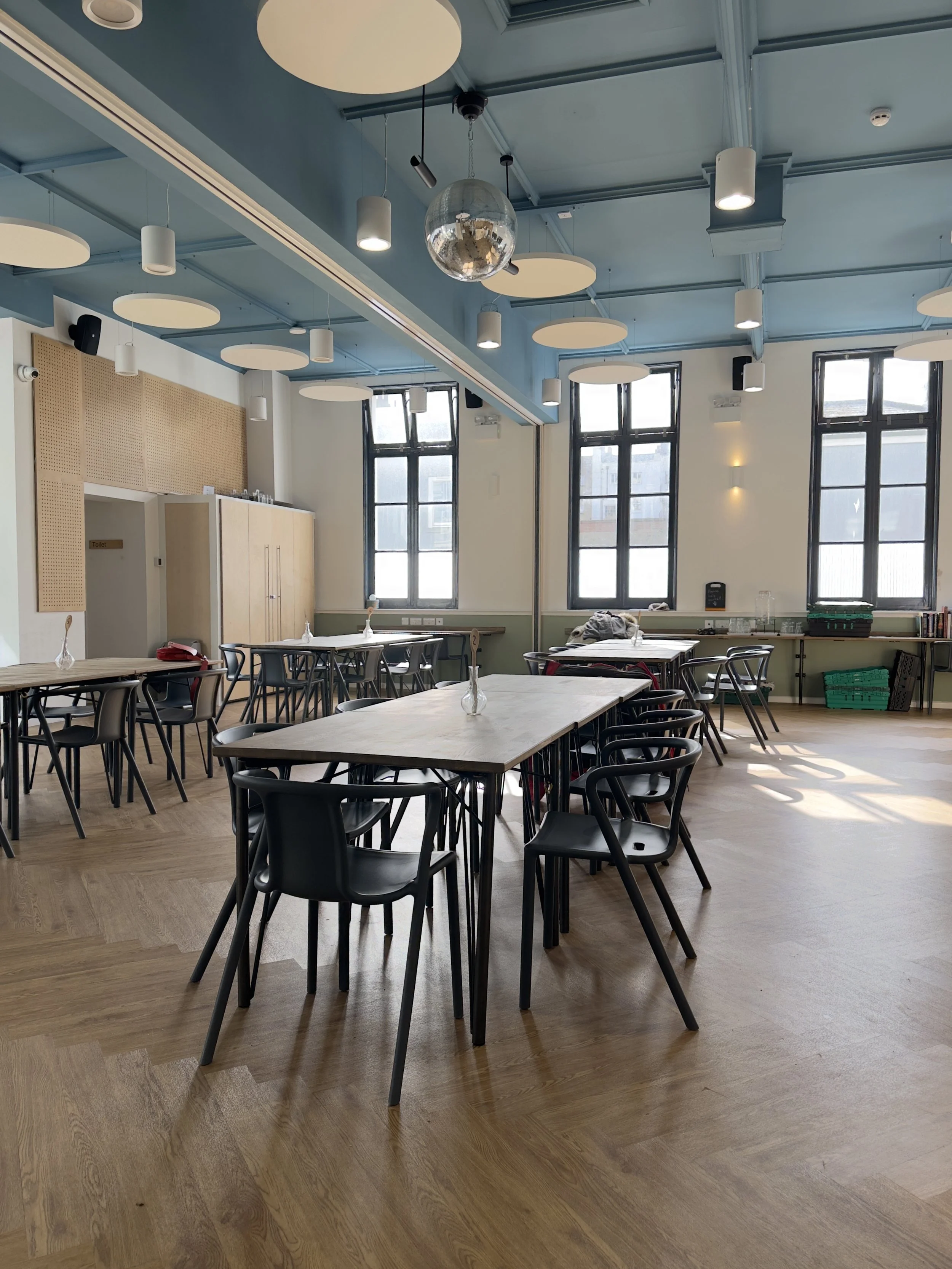
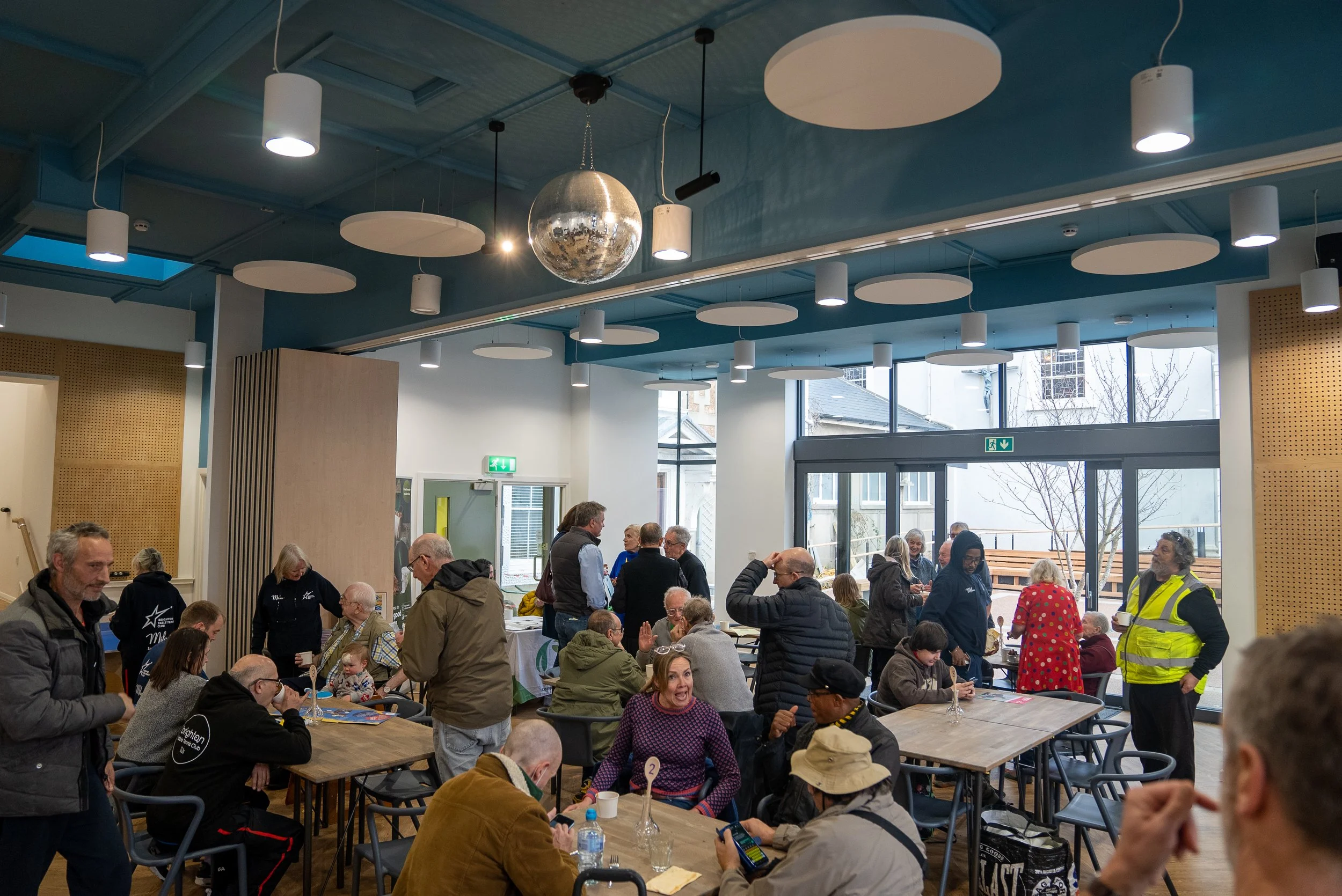
The completed Hub now operates as a genuinely shared civic resource, supporting multiple organisations simultaneously within a coherent, adaptable and accessible space. For us, this is where the value of the project becomes truly visible: in the relationships between the building’s renewal and the wider change it now supports socially, operationally and economically.
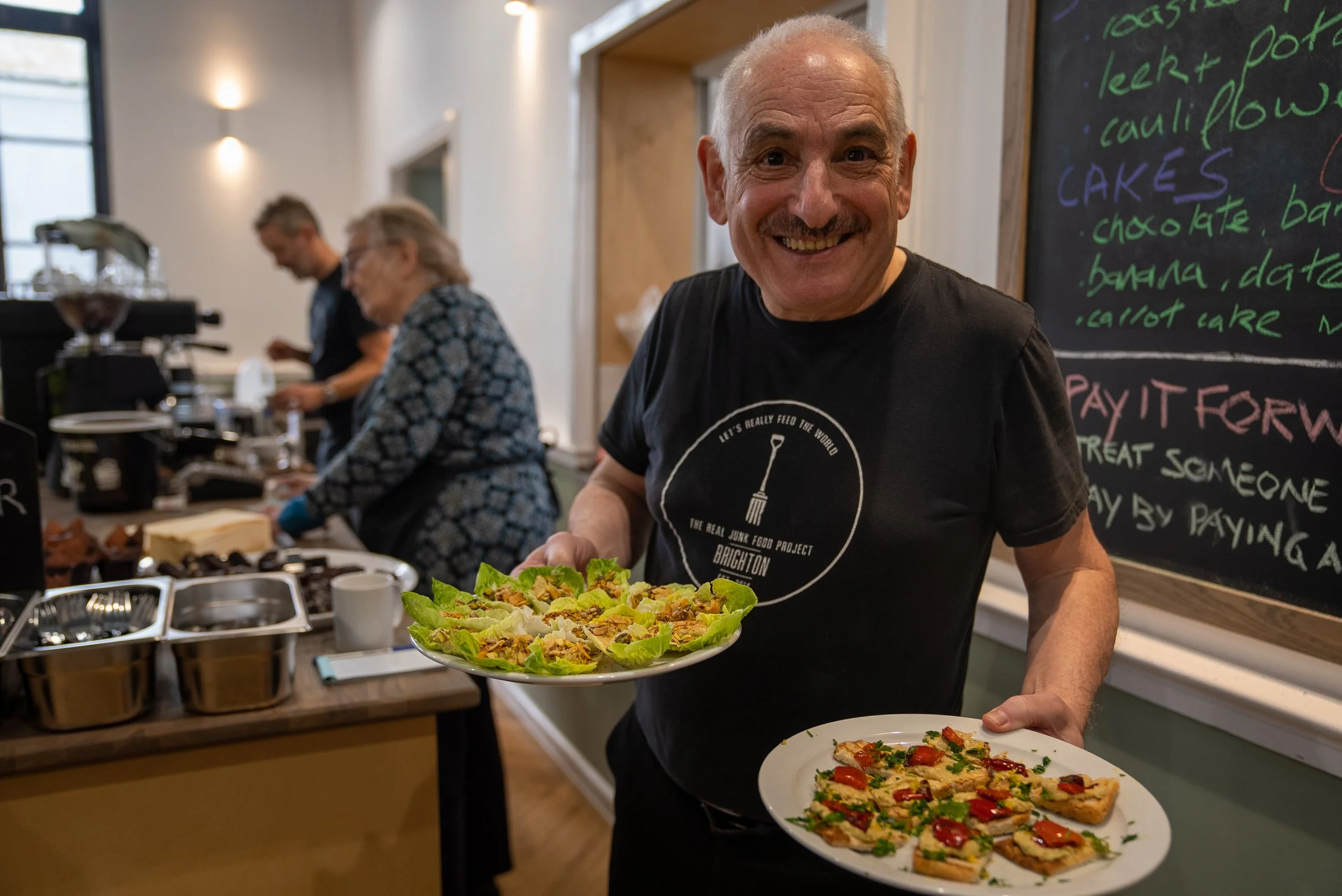
The impact is visible across a wide range of services and activities. The Real Junk Food Project has increased from serving 50 meals per week before completion to approximately 300 meals per week. Brighton Table Tennis Club has expanded its coaching sessions for players with long term health conditions including people with Parkinson’s Disease, wheelchair users and those experiencing mental health challenges. By creating a space for people to socialise and share meals together, it is improving wellbeing and helping the club to build its volunteer base. The organisation is now working with local schools to provide hot meals and coaching sessions for children once a week, with plans to expand this further.
For Voices in Exile, the impact goes beyond access to support services. Refugee clients have reported feeling more integrated because they are able to meet others informally in the cafe over a coffee or food whilst accessing support.
The hall also supports St John the Baptist Church in new ways, including daily Mass, dementia support meetings, Diocesan mental health training and gatherings for the joint Anglican and Catholic anti-slavery group. The local NHS Trust now socially prescribes to the Hub. In addition, the building accommodates after school clubs, ESOL sessions, conference plans for outreach groups and collaborative working between partner organisations, while also acting as a base for independent groups to meet, work and network. By enabling flexible, concurrent use, the building supports more resilient and long-term financial sustainability.
One of the project partners reflected that people often known to be “dysregulated in the community are calm and appreciative of the dignity and welcome that is offered to everyone. This pro-social atmosphere has become established astonishingly quickly and naturally.” Their observation captures something important about this project: the design has not only improved accessibility and functionality, but has helped to create an environment where people feel safe, included and respected.
Social value was also embedded in delivery through furniture made by Making It Out, supporting people moving on from prison, homelessness or addiction. This reinforced the client’s ambition to create a space of dignity and inclusion.
“Stefanie Stead has been among the best architects I have worked with in my 45 years in the construction and associated industries, as a consultant, contractor responsible as Chief Executive for many major buildings in London and around the world and as a Client myself.
She has demonstrated a sensitivity to understand, interpret and execute the brief, in this case with 4 Partners who have joined together to create the Fitzherbert Community Hub in Brighton - a benchmark project. Her imagination and interpersonal skills have combined to create a design that all the Partners are delighted with, as it responds to their vision being delivered, with good accessibility and functionality which is also attractive to the funding agencies we are applying to.
In 1911 Churchill said, ‘Firstly architects fashion the building, thereafter the building fashions us’. I have little doubt that Stefanie’s design will fashion all the multitude of users very well.”